

America is once again confusing aggression with strength. Missiles across the Middle East. Political theater dressed up as resolve. A governing style that treats domination as leadership and assumes the rest of the world will admire a country forever performing toughness for the camera. Hard power has become the preferred language of American life, as though military force and perpetual menace are the surest signs of seriousness.
A strong national defense matters. Protecting allies matters. But this goes well beyond defense. The Trump administration and its allies are gutting the institutions that have long given the United States influence far beyond the battlefield.
The damage runs through the country’s cultural life, educational life, and civic life. While Trump and company indulge their appetite for swagger and war-making, they are dismantling the side of American power rooted in culture, democratic values, education, public trust, and the ability to attract rather than simply threaten.
The attacks have been both symbolic and specific: defunding PBS and NPR, gutting the mission of the Kennedy Center, treating public support for the arts and humanities as “woke,” and encouraging consolidation across film and television that will predictably lead to fewer creative risks and more slop approved by men who think art begins and ends with franchise management. A country that weakens its own cultural institutions looks less like a superpower than a bully with thinning skin.
Joseph S. Nye Jr., the leading thinker behind the concept of soft power, understood that American influence never rested on military force alone. It also grew through culture, education, diplomacy, alliances, values, and exchange. As he wrote in Foreign Affairs, the United States accumulated soft power “based on attraction rather than coercion.” That point says more about real strength than most of what passes for foreign-policy thinking in Trump’s orbit.
The damage lands here at home, too.
Take PBS, as a clear example. Public broadcasting brought the arts and humanities into people’s homes long before American culture was carved into subscriptions and paywalls. It gave generations of Americans access to Sesame Street and Mister Rogers’ Neighborhood, yes, but also to Great Performances, Live From Lincoln Center, PBS NewsHour, Ken Burns documentaries, and a broader public culture that treated audiences like citizens rather than market segments.
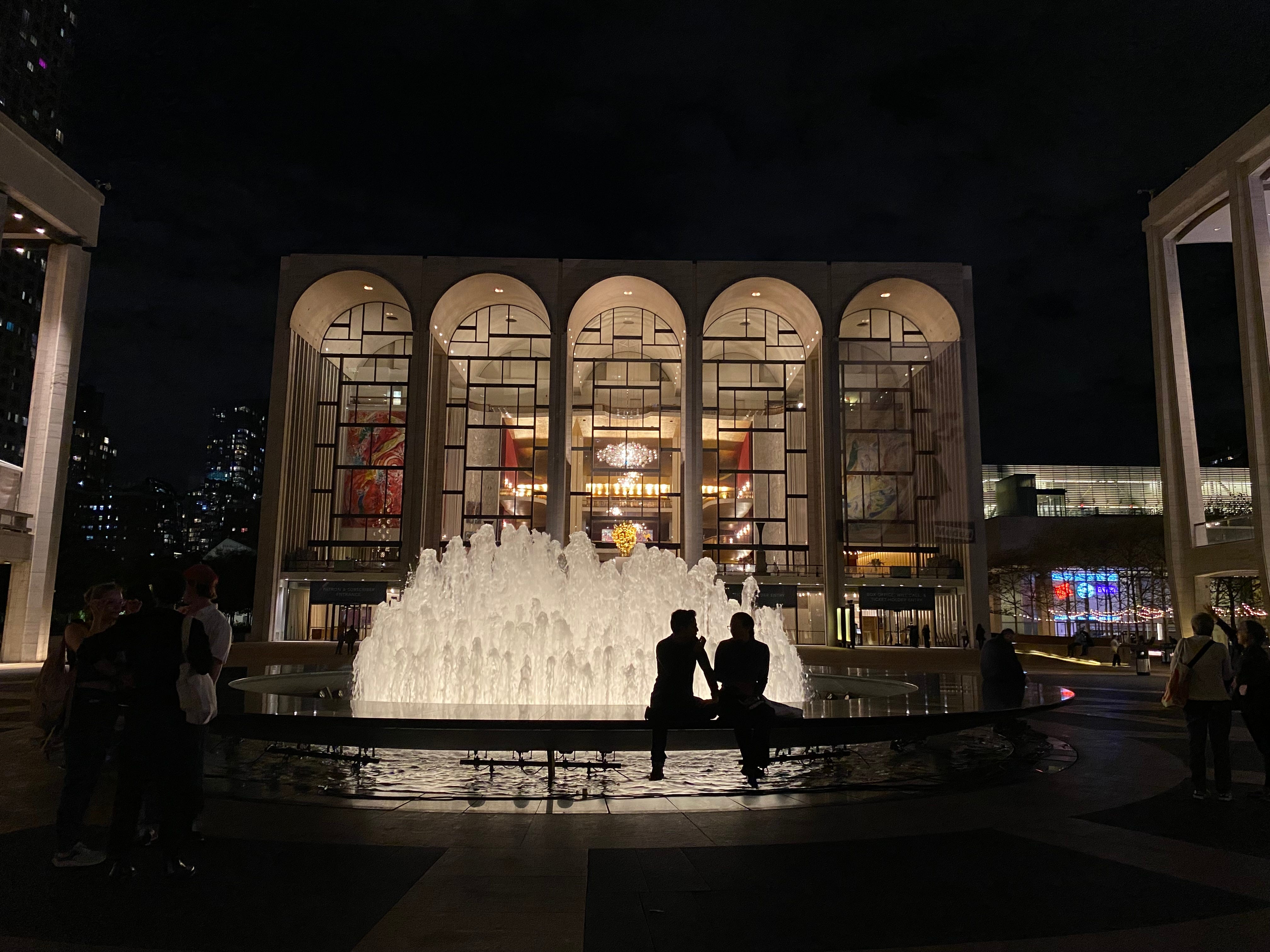
Without Live From Lincoln Center, I may never have developed my love of classical music. I may never have fallen so deeply for the idea of a performing arts center that would later shape my career and even become the setting for my marriage proposal. That access mattered. Leonard Bernstein. Itzhak Perlman. George Balanchine. Alvin Ailey. Those artists should never have been accessible only to New York elites and the sort of donors who use “summer” as a verb. They were broadcast into homes across the country, free of charge, because there was once a broader belief that culture belonged in public life.
To me, that was part of the American promise.
Not only opportunity, but access to the country’s cultural life. A sense that the best of America should actually belong to the public. That also mattered internationally. Jazz, Broadway, public television, museums, universities, dance, and orchestras were part of American influence. They told the world the United States had imagination, ambition, beauty, and depth. They suggested a country with a soul, not just a military budget and a costly victory arch.
Now we are governed by people who seem to hear the phrase “cultural institution” and react as though someone has sentenced them to three straight hours of experimental theater in folding chairs. Their hostility is blunt and consistent. Public investment in art, history, libraries, journalism, and education is treated as weakness, frivolity, or ideological contamination. The Los Angeles Times put the logic plainly: “Bombs are in and art is out.”
Budgets tell stories. So do political targets. The story here is clear: force deserves investment, while curiosity, beauty, life-saving research, and public knowledge can fend for themselves. Under that logic, the country shrinks. Its vision shrinks. Its credibility shrinks. Its ability to persuade shrinks.
The same pattern is playing out in higher education. Universities, like arts institutions and public media, remain places where curiosity can give greater meaning to life. A spark first ignited by a PBS performance, a documentary, a concert, or a play can deepen into study and genuine intellectual growth. That is one reason higher education is under attack, too. A politics built on grievance has little use for institutions that encourage complexity or historical memory.
I have been thinking lately about Soft Power, David Henry Hwang’s musical, which we brought to life while I was at Center Theatre Group. Even then, the title felt like a warning. Hwang was clear when speaking to the Los Angeles Times as we were preparing to open the show: “I began to wonder to what extent is the goal of achieving soft power inherently incompatible with a government that also wants to control content and has a very top-down censorship relationship to its culture and entertainment.” A country cannot sustain cultural influence while policing and defunding the culture that influence depends on. It is self-sabotage with a flag pin.
Neal Shapiro, President of WNET, made a related point recently on “Here’s The Thing with Alec Baldwin” when reflecting on the original purpose of public broadcasting: “In 1967, Lyndon Johnson said, we need a public broadcasting system. He looked at it with envy like what Britain had with the BBC and said, we need that too. And it was part of the great society.” A democracy needs institutions not fully governed by the market and not perpetually threatened by political retaliation. It needs places where the purpose is to educate and elevate, even if that sounds unbearably quaint to people who think every public good should have to survive Shark Tank.
What makes this moment so maddening is the smallness of the people driving it. The rhetoric is huge. The imagination is tiny. The branding is patriotic. The actual vision is punitive and profoundly incurious. They want the aesthetics of national greatness without any of the substance. The flag, the flyover, the threats, the applause lines. The museums, libraries, classrooms, documentaries, orchestras, and public media systems that help form an intelligent democratic culture are treated as disposable, or worse, dangerous. Collateral damage in the long war on nuance.
As the United States approaches the 250th anniversary of the Declaration of Independence, the harder question has less to do with commemoration than inheritance. What kind of country is being prepared for the next 250 years? What will future generations receive from this era of chest-thumping and cultural vandalism?
Will they inherit a nation that still believes art matters, that public knowledge matters, that cultural life belongs to democratic life? Or will they inherit a country shaped by fear and war?
Trump has made America weaker. Weaker in the eyes of adversaries who can see the gap between bluster and strategy. Weaker in the eyes of allies who no longer know whether American commitments carry any real weight. And weaker in the eyes of its own children, whose pathways into art, history, knowledge, and civic life grow narrower with each fresh act of ideological demolition.
From attacks on public broadcasting to the broader dismantling of education and cultural institutions, the message has been relentless: imagination is expendable, learning is expendable, public-minded culture is expendable.
Those things helped make the United States influential in the first place.
A country that destroys them tells the world plenty about itself, and none of it says strength.