

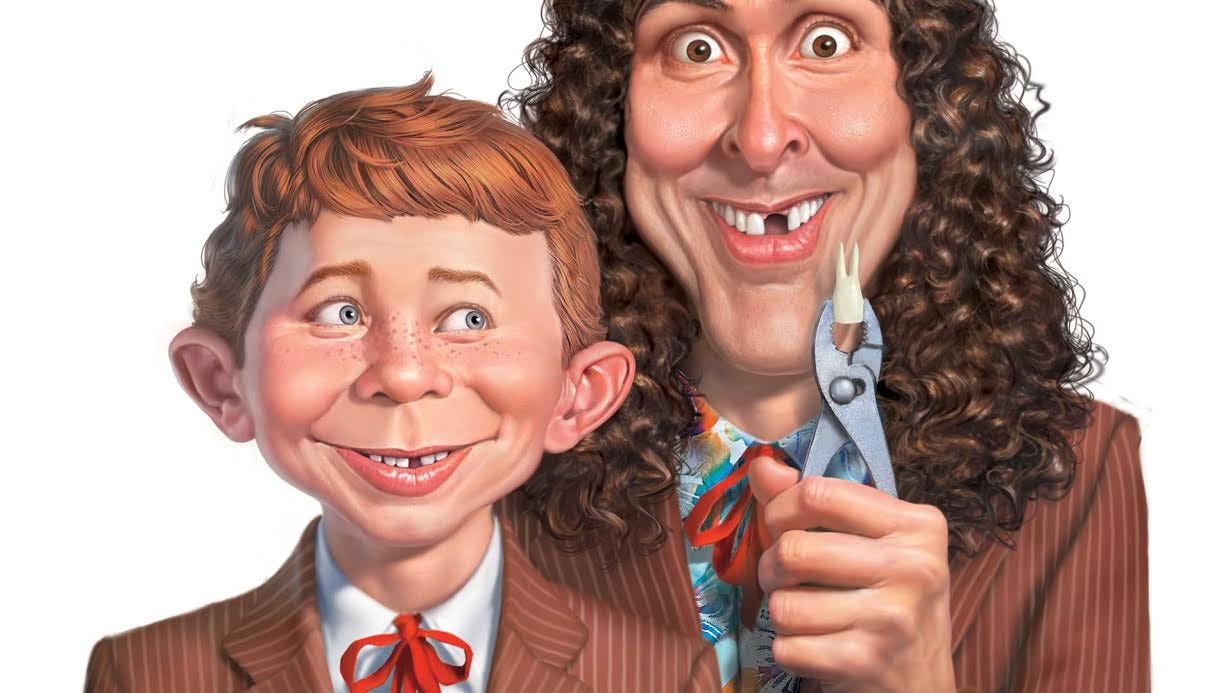
Few parenting pleasures beat discovering your kids have become obsessed with “Weird Al” Yankovic.
My boys are devotees, begging me to turn on his music when we get in the car and laughing before the joke lands because they already know something ridiculous is coming. The “uncool silliness” of his accordion antics tapped into something primal for my boys.
It’s a thrill, because Weird Al was my gateway to accepting that I was, in fact, weird.
As a kid, I would have chosen nearly any other word for myself. Nerd felt easier, but even that felt like a shameful label. Perhaps theatre geek, which at least came with an implied cast album. I was a closeted “Star Trek” fan and a David Lynch devotee, the kind of kid who could disappear into Mad magazine as if it were smuggled into my house from a cooler, stranger world. I once created my own comic book and submitted a few pages to Mad. They rejected it, of course. I framed the rejection letter and put it on my wall, easily the most revealing sentence I have ever written about myself.
“Weird” scared me.
It meant other kids noticing the part of you that you were working very hard to keep hidden.
Some of that came from childhood insecurity, that period when everyone is secretly miserable and pretending their haircut was a choice—my middle school buzzcut came with a week of taunts. Some of it came from the quiet tension of assimilation. Like many Jews who grew up in a sanitized corner of America, one always asked how much difference was acceptable before difference became a problem.
I couldn’t have articulated that as a kid, but I knew that staying under the radar felt safer. Just one problem…at my core, I was a weirdo.
Like a moth to a flame, I kept being drawn to what cool kids saw as the uncool side of life. Confidently weird provocations from “The Far Side.” Steve Martin’s absurdity. David Letterman’s irony. Watching “Twin Peaks” while holed up in my military dorm room raised the eyebrows of my roommate. So did joining friends in the dorm basement to watch “The Rocky Horror Picture Show.” Nothing says unassuming like a moviegoing experience full of fishnets and glow sticks.
Then came Weird Al.
His music made weirdness exciting. “UHF” made it cinematic. His whole sensibility suggested that weirdness could be a full-blown aesthetic. It could make blasting parody and polka in the car seem cool enough to risk ridicule from passersby.
That may have been delusion, but I felt a little braver.
To love Weird Al, you had to understand the original thing well enough to appreciate his parody. And yes, Weird Al, bless him, also gave the world “Pretty Fly for a Rabbi,” which earns him honorary entry to the tribe.
The weirdos were always my people, even when I was too embarrassed to claim them. Mel Brooks showed me how highbrow intelligence could crash into lowbrow laughs and come out sharper for it. Mad magazine arrived in my mailbox like a clarion call from the resistance, ridiculous in the best possible way and much smarter than it pretended to be. The magazine’s genius came from understanding American culture well enough to question it all.
That felt Jewish to me before I fully understood why. It didn’t hurt that many of Mad magazine’s writers were fellow Jews.
I have come to recognize my neuroticism as a kind of radar. A weird lens can save you from accepting the world as you are told it must be, always questioning to be one step ahead of the game.
I question those with longing nostalgia when it is colored by a romanticism of stagnancy. Death of a Salesman remains devastating because Willy Loman cannot survive the collapse of the world he was promised, unwilling to accept a new reality. MAGA culture has turned that same grief into a movement.
Difference gets framed as an attack. Change becomes a war on values. Any world that does not resemble the one some people remember, or imagine they remember, must be treated as corruption. The weird must be disciplined. The queer must be explained away.
As UFC fights take center stage in our nation’s capital, the spectacle feels like another reminder of the bro culture and toxic masculinity that sent me running toward Weird Al, Mad magazine, ’80s nerd movies, and musical theatre in the first place. Force was never my forte, shocking as that may be to anyone who has seen me attempt a pull-up.
Instead of getting lost in shooter video games, I hunted down a copy of Pee-wee Herman’s special at the Roxy. I found comfort in subversive humor that offered escape from schoolyard bullies and ignorant politics. So yes, I would be stoked to discover my kids seeking out Weird Al videos on YouTube over begging to watch the monstrosity of violence under The Claw on the White House lawn. Watching “Stranger Things” led my oldest to start a Dungeons & Dragons club with his friends and join the after-school club. I’ll call that a nerdy parenting success.
As a parent, I now find myself wanting to lean harder into all the nerdy, uncool things I loved as a kid but often kept tucked away in the shadows. Let the accordion play loudly. Let the kids know that the world is more interesting when you refuse to blend in.
One of my kids came home after being harassed by classmates because he wanted his fingernails painted. Another wondered whether he would be made fun of for marching in our local Pride parade.
Those are the moments when parenting becomes a check on society.
I tell them other people’s discomfort with difference can signal a faulty moral compass. That difference should be celebrated. I tell them to find the kids who see the world through googly eyes.
I have worked hard to give my kids the privilege of growing up as themselves. That matters deeply, especially in a time when nostalgic conformity keeps being repackaged as patriotism and cruelty keeps trying to pass itself off as strength.
My kids should be fiercely weird and compassionate. That is the true sense of bravery.
Be loud about the things you love. Paint your nails. March in the parade. Watch the strange movie. Love musical theatre. Love “Star Trek.” Love the thing that makes some other kid roll his eyes because he has not yet figured out how exhausting it is to pretend.
And when someone calls you weird, strange, or different, wear it like a badge of honor. Be more like Sid Caesar and less like Lawrence Welk. Dare to be different.